
2025 Watercraft Inspections
173,853 Watercraft inspections
11,100 High Risk Watercraft Stopped
24 Watercraft Inspection Stations
ISDA’s watercraft inspection stations are a critical line of defense in preventing the spread of invasive species like quagga and zebra mussels into Idaho’s waters. In 2025, ISDA operated inspection stations across the state, conducting 173,853 inspections, including more than 24,000 inspections at Snake River locations.
Watercraft inspection stations help ensure that boats entering Idaho are clean, drained, and dry, preventing the introduction of invasive species that threaten local ecosystems, infrastructure, and recreation. ISDA continued to strengthen the program in 2025 through expanded staffing, extended operating hours, and ongoing program improvements.
More than ONE MILLION inspections have been conducted in Idaho under this program since 2009.
MONITORING IDAHO’S WATERS
To protect Idaho from the environmental and economic devastation of invasive species, early detection is essential. Across the state, ISDA staff and partners monitor waterways for aquatic invasive species—such as mussels, plants, snails and crayfish—using tools like veliger nets, ponar dredges, substrate samplers, and both visual and drawdown inspections.
Invasive Species Water Samples
In 2024, ISDA began utilizing eDNA sampling, a highly sensitive tool that detects invasive mussels by identifying their DNA in water rather than searching for live organisms, allowing for very early detection even before reproduction occurs and from up to a mile away. It is used to guide and strengthen traditional monitoring by prompting increased surveys and adding an extra layer of protection for critical waterbodies.
In 2025, ISDA expanded its microscopy laboratory capabilities, enabling staff to process quagga mussel veliger samples in-house. This on-site, real-time analysis supports faster response times and, during the Snake River response, allowed for more rapid confirmation of the appropriate treatment strategy.
In 2025, ISDA conducted 7,499 quagga mussel samples, a 113% increase from 2024. Monitoring focused heavily on the Mid-Snake River, with 450 surveys completed prior to detection and more than 220 delimiting samples collected after detection.
SNAKE RIVER QUAGGA MUSSEL RESPONSE
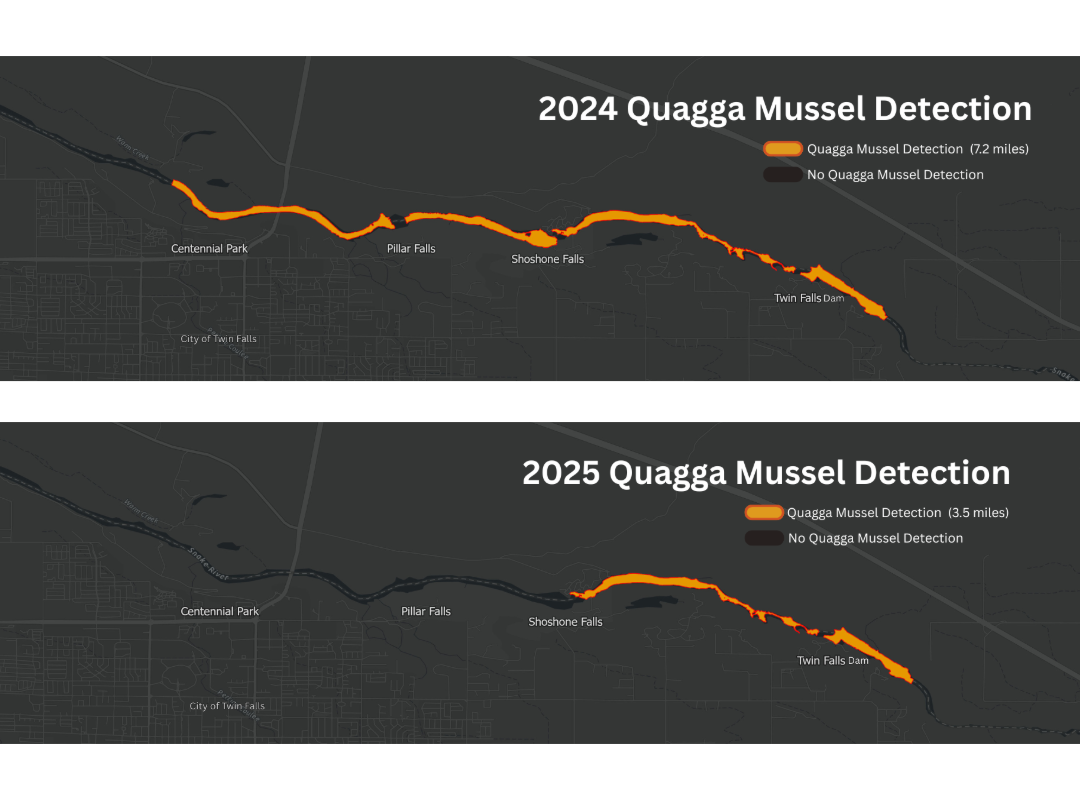
ISDA is committed to a strategic, science-driven response to fully eradicate this invasive species and protect the state’s waterways. ISDA’s treatment plans are shaped by extensive ongoing sampling and careful evaluation of the Snake River’s complex flow patterns and site-specific dynamics.
September 2025, a small population of quagga mussels were detected within the known infested area near Twin Falls. Extensive sampling data showed the quagga mussel impacted area as 3.5 miles of the river, which is down from an impact area of 7.2 miles in 2024. These sample results indicate progress and that the targeted treatments have reduced the quagga mussel impacted area by 51%.
This level of containment and reduction is unprecedented for quagga mussel infestations nationwide, demonstrating that Idaho’s proactive, science-based approach is delivering measurable results and setting a new standard for invasive species response.
The 2025 treatment maintained an effective treatment concentration of 1 ppm of copper through the treatment area over a 200-hour period, followed by dissipation of copper to background levels downstream. The plan also accounted for river depth, freshwater inputs, sediment sorption, and variable flows to ensure treatment effectiveness across the complex river system.
INVASIVE SPECIES PUBLIC AWARENESS CAMPAIGN
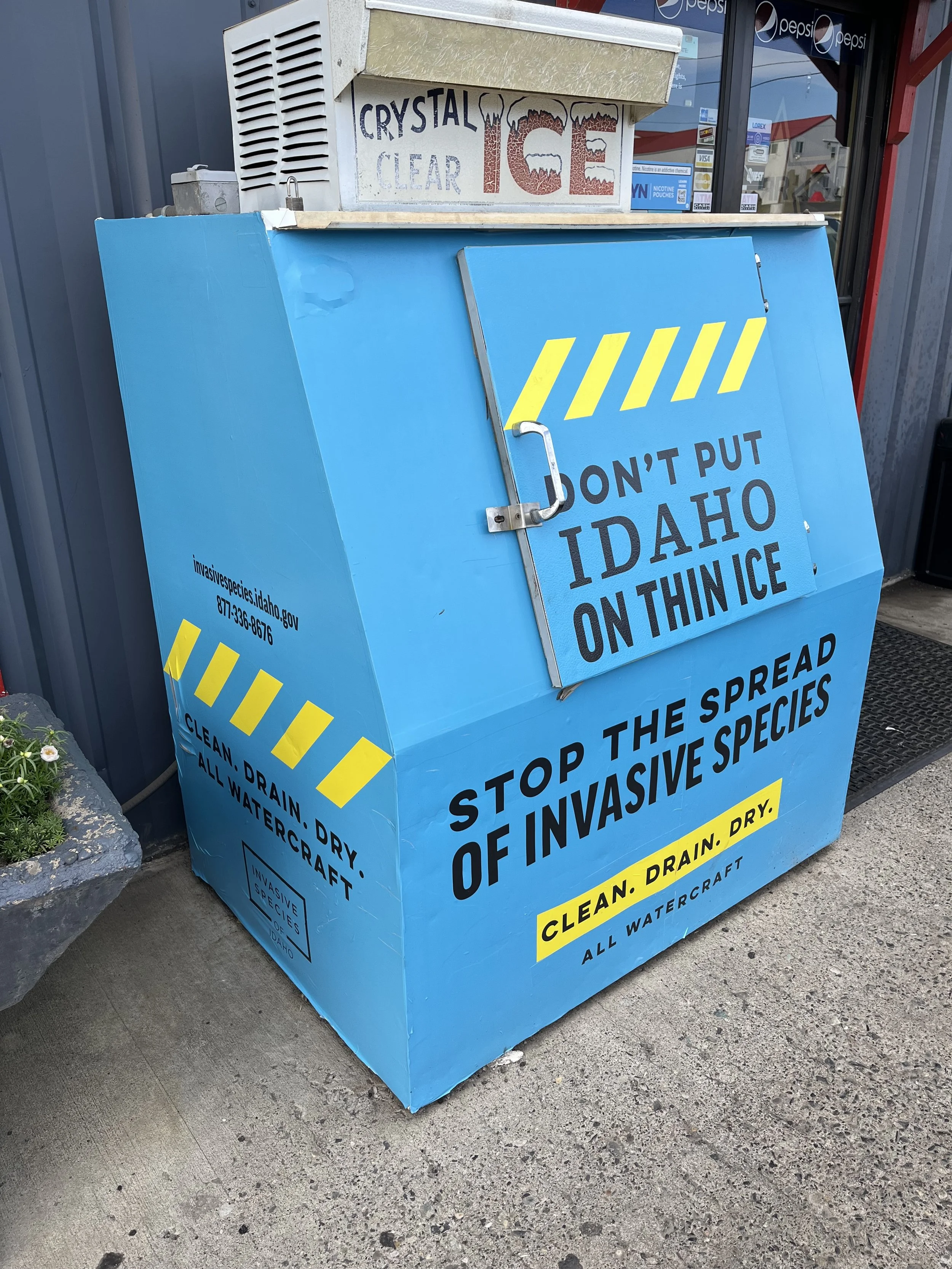
Public awareness is essential to protecting Idaho’s waters, and our invasive species awareness campaign focused on helping Idahoans understand what is at stake and what they can do to prevent the spread of quagga mussels.
In 2025, we followed water recreationists through their full boat prep journey, using video, audio, social media, and long-form placements in local news and weather environments to build broad awareness, then shifting to targeted, action-oriented media like ice box wraps and gas station toppers as boaters headed to the water. This approach aimed to boost compliance by reaching regional and local water users where they already are, reminding them of their responsibilities while also educating the broader public about the risks of an infestation. It’s Up to Us to protect Idaho’s waters.